

By Miriam G. Desacada
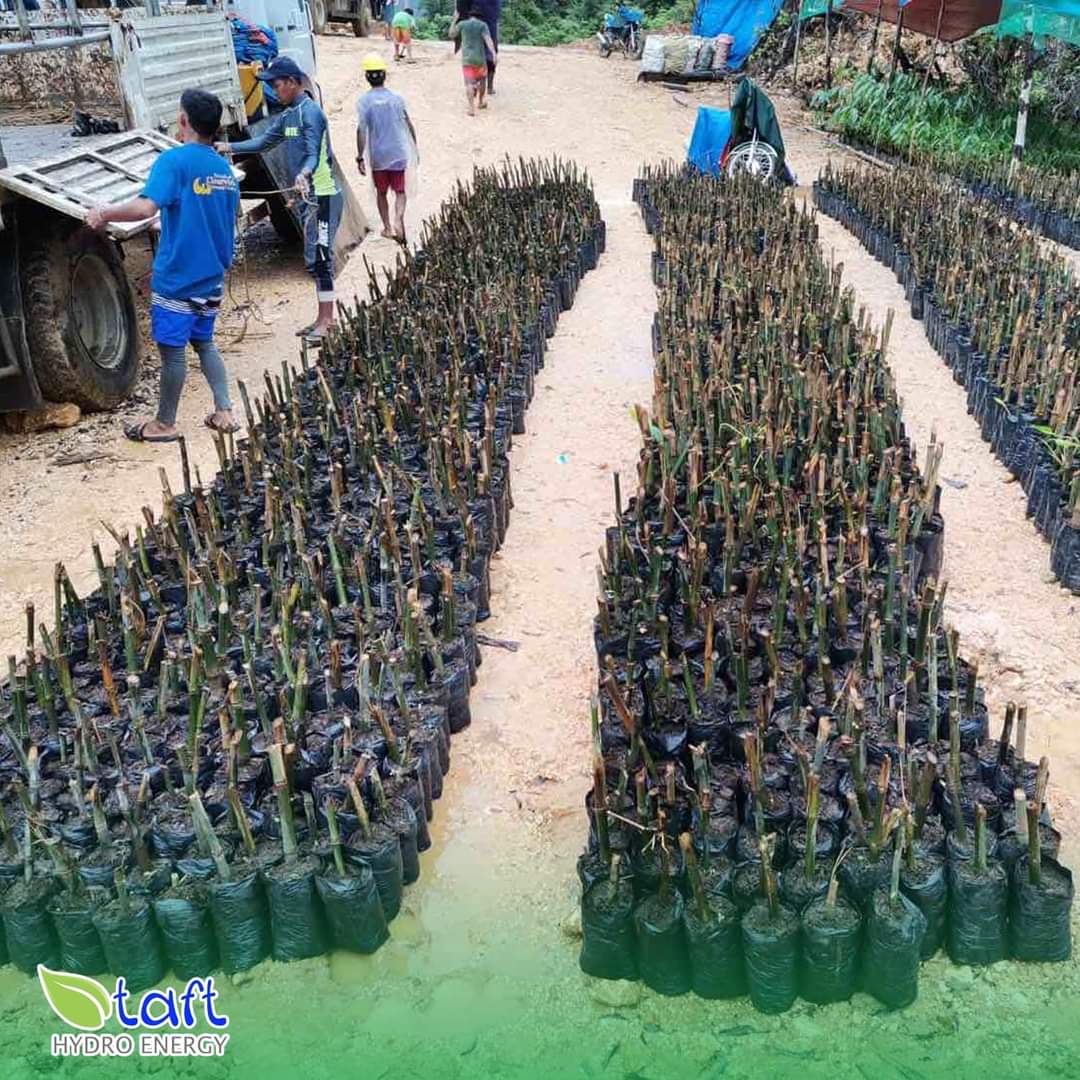
Taft Hydro, a renewable energy company based in Taft, Eastern Samar, had launched a giant bamboo planting project in the 4th class town of Motiong in neighboring Samar province.
Benjie Picardo, president of Taft Hydro Energy Corporation, said the company will start planting the bamboo this month (April) over a 19-hectare area at Barangay Canvais in Motiong.
The 19 hectares are part of the 50-hectare area to be planted with giant bamboo in a span of five years, said the Taft Hydro top official. “We are targeting to have more than 2,000 workers who are residents from this mountain barangay,” he said.
Taft Hydro Energy Corporation (THEC) aims to plant more than four million giant bamboos in the area, he said, adding that the project has been conceptualized to provide livelihood to residents in that barangay and eliminate the slash-and-burn farming method that only destroy trees and vegetation of an otherwise fertile land.
Picardo, in an exclusive interview, explained that the bamboo planting project is part of THEC’s corporate social responsibility initiatives, which will be implemented in partnership with the Department of Environment and Natural Resources-Region 8 office and other stakeholders of Samar province.
THEC is also planning to put up a factory for bamboo processing when the company is done planting two million propagules, said Picardo who further mentioned that will generate more employment while increasing the value of the harvest.
“Engineered bamboo can be used as construction material due to its high-tensile strength characteristics,” he said. “By the time we are harvesting, there will have put up a processing plant already.”
Picardo said “bamboo is the most voracious plants in terms of carbon sequestration. It grows do fast you could literally even watch it grow.”
Online sources define carbon sequestration as the process of capturing and storing atmospheric carbon dioxide. It is one method of reducing the amount of carbon dioxide in the atmosphere with the goal of reducing global climate change. Carbon dioxide binds to plants during photosynthesis in exchange for oxygen, thus cleaning the atmosphere.
“Aside from carbon sequestration, bamboos protect watersheds and create a huge social impact in terms of alternative livelihood provided to the residents who had been cutting trees for charcoal-making—their main livelihood,” said Picardo.
“Bamboos, which can be harvested in four to five years—may continue to spread with the rhizomes left after harvest—are good replacement of trees, which besides being scarce globally take 30 to 40 years to mature for harvesting,” he explained.
“The beauty of bamboo is that it helps reduce global warming while creating a new industry that will provide jobs to the people without harming the environment,” Picardo said.
“Hoping that the carbon market will sustain this project. We are also talking to different stakeholders who want to contribute in the fight against climate change,” he said, adding that a similar undertaking is being done in Bukidnon province and Cagayan de Oro City.
THEC has more than 700 workers from different localities in the province, and it helps stop also illegal poaching activities of residents who are making charcoal as their means of livelihood before.
THEC is currently running a 16-megawatt hydro power plant at Barangay San Rafael in Taft, Eastern Samar. It is also constructing a 14-megawatt hydro power plant in the same barangay, that is targeted to be completed by September this year, Picardo said.
Picardo, a native of Dolores, Eastern Samar who succeeded in his profession and business abroad, further said that another project of the company is to build an 80-MW solar farm in the town of Taft this year. —Miriam G. Desacada