

by Miriam G. Desacada
Catarnan N.Samar–Oceana, an international organization for marine environment protection, has lauded the Northern Samar provincial government for adopting a science-based fisheries management and committing to post-harvest and market support.
Oceana also commends Northern Samar Governor Edwin Ongchuan for his decision to adopt the science-based approach in managing the fisheries industry of the province and for his commitment to address the critical issue of post-harvest fish losses, the dire state of the locals’ nutrition, and prevailing poverty in the province.
Oceana’s study findings had shown that the province had been experiencing loses of as high as almost 40 percent of the total fish catch, from harvesting to marketing stages. This data was presented by lawyer Rhea Yray-Frossard, director of Oceana’s Campaign and Research, during the recent Provincial Development Council (PDC) meeting.
Oceana’s study, a pioneering yet comprehensive one, focused on the towns of Allen, Victoria, San Isidro, Capul, San Antonio, and San Vicente, which are all part of the San Bernardino Local Government Unit Alliance of Northern Samar (SaBeLANS).
Among the key findings was that San Vicente town had the highest physical losses during the fishing stage, especially during the glut season for tuna and sardines. They attributed this outcome to the lack of cold storage and processing facilities, resulting in the loss of 85 percent of the quality of the fish.
Allen town also experienced “predominant quality losses due to reduced freshness, physical damage, and substandard sizes of export species,” the findings noted.
Yray-Frossard further disclosed that in Victoria town “the situation is even worse because the local fishers catch is undervalued by up to 75 percent during peak seasons due to market pressures.” She added that this loss means less money for families and less food for the communities that rely much on the catch for domestic consumption.
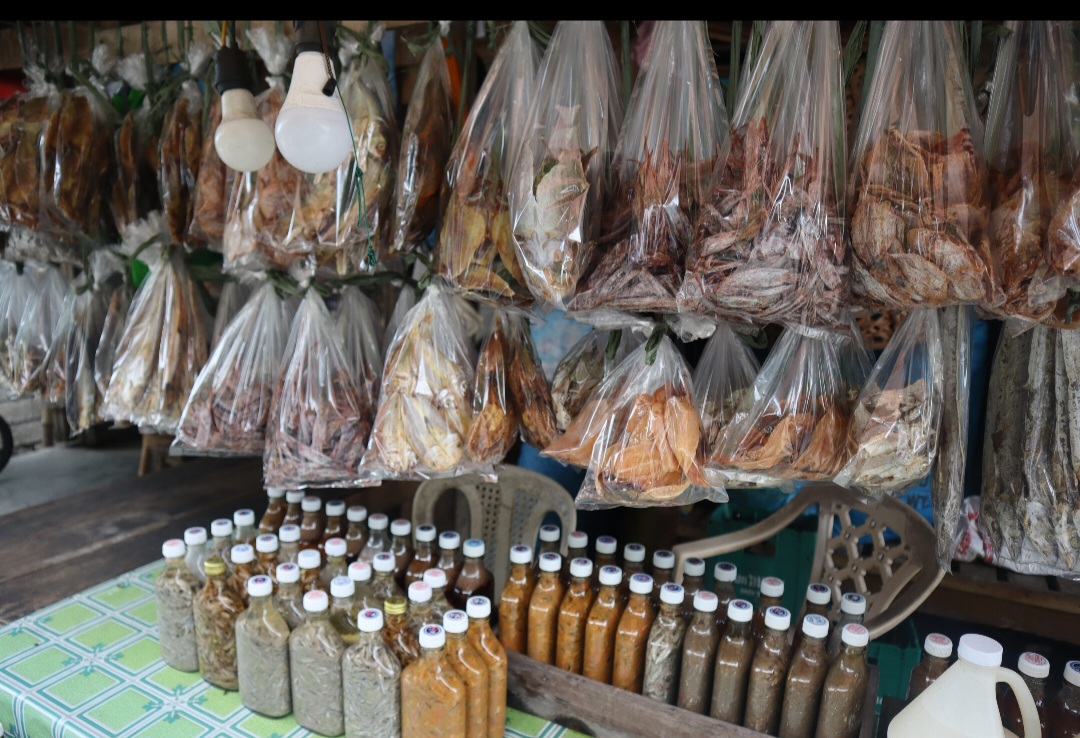
The Oceana director however told the PDC that there were comparatively lower loses in San Isidro and Capul towns where there are “more efficient food distribution chains, and home-based technologies are adopted such as drying fish on makeshift bamboo platforms, processing fermented fish paste (bagoong) and fish sauce (patis) in bags and recycled containers.”
Yray-Froussard remarked that these technologies help the people there make the most out of anchovy in oversupply. “Old, recycled refrigerators are used for cold storage because Capul has no public market.”
Yet she explained that, even if these areas had lower losses, the struggle is apparent. “We need to provide urgent, comprehensive support to protect these vulnerable communities,” she said.
Oceana had been working with the Center for Sustainable Aquaculture and Agri-based Innovations (CENSAAI), led by fishery expert Dr. Ronelie Salvador, in producing the report done in 2023.
Also during the PDC meeting, Salvador shared the following five recommendations to curb post-harvest fish losses:
1) Quantify losses at each stage in the distribution chain; 2) Improve and institutionalize reporting and monitoring systems; 3) provide livelihood support to mobile vendors and women, train them on postharvest handling and preservation; 4) through the LGUs, set limitations on the fish catch volume of species reported to have high losses during peak seasons to reduce waste; and 5) establish postharvest facilities such as cold storage facilities for the processing and preservation of catch.
Oceana has been working also with Fisheries Management Area (FMA) 7 that covers the San Bernardino Strait of Northern Samar to address these critical issues, and promote sustainable fisheries and reduce postharvest losses.
Based on the findings and recommendations of the Scientific Advisory Group, the deterioration of sardine stocks in Northern Samar is attributed to overfishing and destructive fishing practices. The FMA 7 Management Body has adopted the resolution to implement the National Sardines Management Plan (NSMP).
The Alliance of Samar Bays and Channels and the Samar Sea Alliance for Fisheries Management and Development (Samar), composed of 21 LGUs and the six LGUs of SaBeLANS in Northern Samar, were the first groups to issue local resolution adopting the NSMP in their own locality.
Such adoption is a pioneering effort in the country, that it is possible that they will be among the first LGUs to implement the Sardine Management Plan in the country.
Governor Ongchuan and other key provincial officials attended the meeting, which was aimed at determining evidence-based policy decisions to enhance the sustainability and efficiency of the region’s fishery industry. —Miriam G. Desacada