

By Miriam G. Desacada
Tacloban City–Geologists and members of the UNESCO National Commission of the Philippines (UNACOM) had visited Northern Samar for a three-day exploration and assessment of potential geological sites, foremost of which is the world-renowned Biri Rock Formations, which is most likely to be declared a UNESCO Global Geopark.
Nancy Aguda and Jeremy James Jimenez, geologists from the Center for Neighborhood Studies within the UP System, and UNACOM programme officer Rajee Florido led a geo-site assessment team that visited the province from September 22 to 25.
Northern Samar’s Biri Rock Formations hold the most potential for the coveted UNESCO designation as a Global Geopark. It is also characterized by karst landscapes, which provide a habitat for various flora and fauna, making it a crucial site for biodiversity conservation.
The province itself offers a diverse range of geo-sites such as limestone cliffs, caves, and unique rock structures, bearing a narrative of the Earth’s history, and showcasing millions of years of geological processes that resulted in awesome geological structures that mesmerize the present generation.
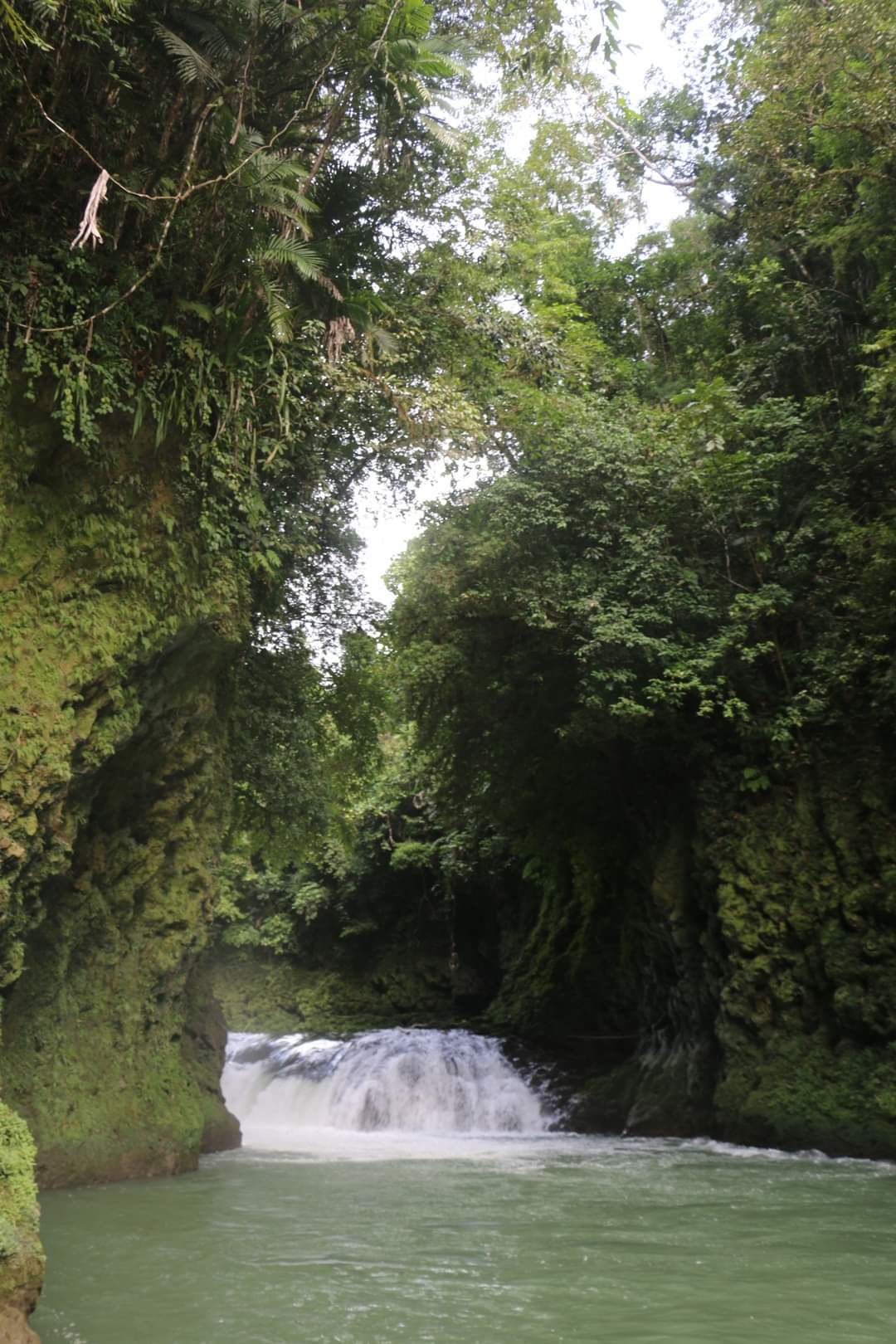
Among those visited by the team, accompanied by barangay and municipal officials and tourism stakeholders, were the ‘Hilulugayan Falls’, an imposing 30-meter waterfall inside a dense forest in Silvino Lubos town; and the ‘Pinipisakan Falls’ in Las Navas town known to have an underground cave chamber with giant stalactites and stalagmites.
Mapanas, an equally beautiful town along the Pacific coastal area, was also visited, for its majestic volcanic rock formations ‘Naputad’ and ‘Pinusilan’ dark blue lagoon naturally carved by nature.
Northern Samar is also known for nationally significant historical places such as Palapag, where the Bisayan Revolt, led by Agustin Sumuroy, against the Spaniards took place from 1649 to 1650. The town also boosts of of a historical page for being the place where historian Francisco Ignacio Alcina partly wrote the ‘Historia de las Islas e Indios de Bisayas’ (History of the Bisayan People in the Philippine Islands) in 1668 – the country’s most comprehensive ethnographic account from the 17th century period.
Palapag, also has a national marker recognizing its role as a Royal Port during the Spanish period. It was the landing site of the scientific expedition, led by Alejandro Malaspina, and the site where the first observatory for astronomy was built.
For geological formations, the town is proud of its Rakit-dakit, Sleeping Lion, Liog-liog Rock formations, and Ginpandayan Natural Pool and Cave.
The declaration of Northern Samar’s Biri Rock Formations, as a UNESCO Global Geopark is among the priorities of Governor Edwin Ongchuan, founded on sustainable development strategies that will carve a sustainable future for Northern Samar.
The dream entails conservation efforts to protect the ecosystems, ensuring that future generations can enjoy their beauty and geological importance, said the governor. —Miriam G. Desacada