

by Miriam G. Desacada
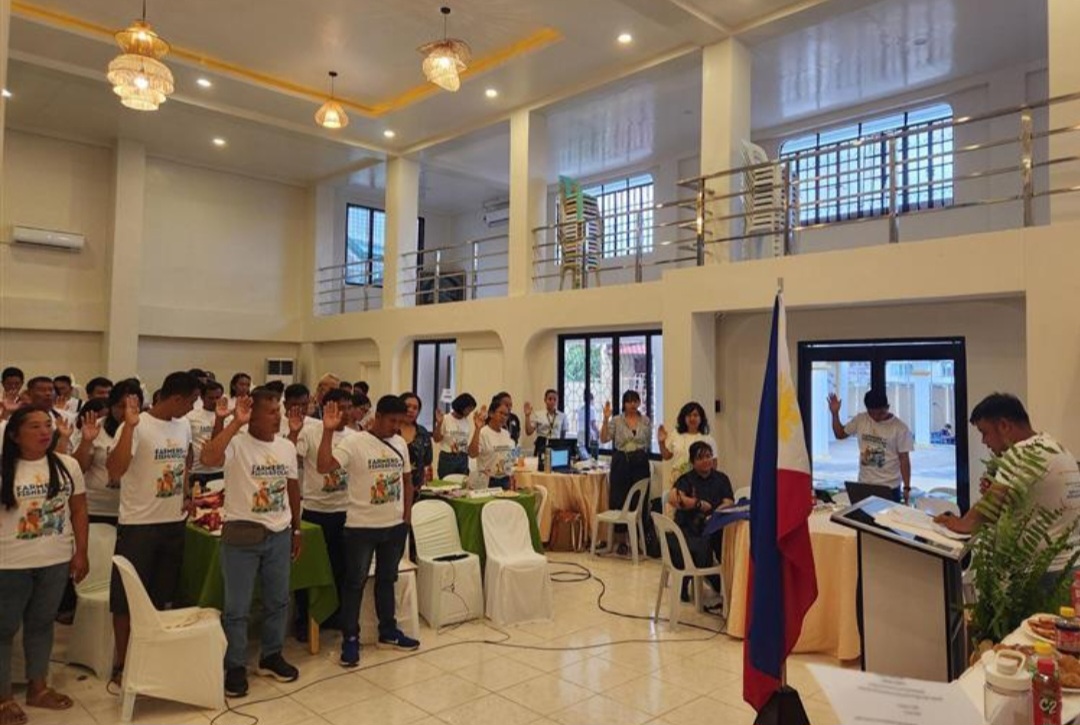
Catbalogan City–The province-wide Food and Livelihood Campaign was launched on Wednesday (October 2) at Daram, Samar by Oceana, an international organization dedicated to marine conservation, and responsible and sustainable utilization of marine resources for food and livelihood among people in coastal communities.
The activity coincided with the Farmers and Fisherfolk Congress, which carries out Oceana’s advocacy to address critical issues in local fisheries—particularly on post-harvest processes and losses—and interventions to ease up poverty and sustain the livelihood of fisherfolks, while protecting and conserving the marine environment.
Oceana chose Daram, a third class island-town in Samar, as the launching pad of its campaign because it has the most coastal population of more than 40,000, as majority of its villages lies along the coast that are bounded by Samar Sea in the west and Zumarraga Channel on the east.
Oceana also noted that the poverty rate of Daram is more than 40 percent, more than double the national average rate of 18 percent. Fishing has been the major livelihood of the town’s residents, thus Oceana deemed it fit to provide it with measures to develop the industry further, make it more sustainable and viable as income source of the people there.
Most households in Samar (60.5 percent) and Northern Samar (75.1 percent) experienced food insecurity during 2018, well above the national average of 54 percent, noted the organization.
Recent studies by Oceana in Samar and Northern Samar indicated that up to 40 percent of fish catch is lost along the way from harvesting to marketing. Considering that the catch of fisherfolk is almost entirely used for domestic consumption, this reduction of catch means not just a loss of income for the fisher, but a loss of food for the community. It is in these communities that malnutrition and high poverty incidence are the topmost concerns, it further said.
Daram Mayor Philip Astorga, in his conversation with the media during the event, was forthright in this statement: “One of our problems in Daram is that majority of our fish catch are not brought here. The fishers sell these in the city. We don’t have (storage) facilities and we lack processing. It’s also hard to find ice here. If ice will be available, our fishers will surely bring their catch here and we’ll have more fish available in Daram.”
Oceana said that, to support and empower fisherfolk, combat poverty, and ensure food security, it is carrying out science-based and participatory Fisheries Management Areas (FMA), fully implementing the National Management Plan for sardines and monitoring of large commercial fishing vessels to stop illegal commercial fishing in waters surrounding the island-municipality of Daram.
Lawyer Gloria Estenzo Ramos, vice president of Oceana in the Philippines said: “Well-designed interventions are needed to reduce fish waste for small-scale fishers, who are often on the water for long stretches of time, in small boats that lack shade, without ice to preserve catch, and far from well-equipped landing sites with access to refrigeration or other methods of preservation.”
She added that Oceana is “committed to working hand-in-hand with artisanal fisherfolk, the local governments, national agencies, academe and other allies to ensure that our oceans are sustainable and resilient as we face the impacts of climate change.”
Astorga, in turn, acknowledge Oceana’s campaign to reduce post-harvest fish loss to boost their fisherfolk’s livelihood is a big help. “Eventually, when we have post-harvest facilities and processing of fish, our problem on malnutrition will lessen because we’ll have quality fish available to us. We will not anymore settle with small fish that are left here in the island.”
The Food and Livelihood Campaign jives with the thrust of the national government to cut post-harvest losses by 8 to 10 percent. It is also one of the keys to improve the local economy and secure food and nutrition needs of thousands of families that rely on fishing in Samar, said Ramos.
“It is alarming that almost half of fish catch is lost before they are landed or rots before they are sold. For 10 years we have been campaigning for science-based fishery management laws and policies to protect our oceans. We’re now helping ensure strong post-harvest measures and support interventions for the livelihoods and well-being for our fisherfolk, … a positive difference for coastal communities and the lives of their children. We see this campaign as a full-circle moment,” added the maverick female executive.
Aside from Mayor Astorga, Vice Mayor Lucia Latorre-Astorga, agriculture officials and Samar State University, provincial and community leaders, and fishing industry stakeholders attended the event, which Oceana described as a collaborative endeavor to address the pressing problems hounding coastal communities in Samar. —-Miriam G. Desacada