

by Miriam G. Desacada
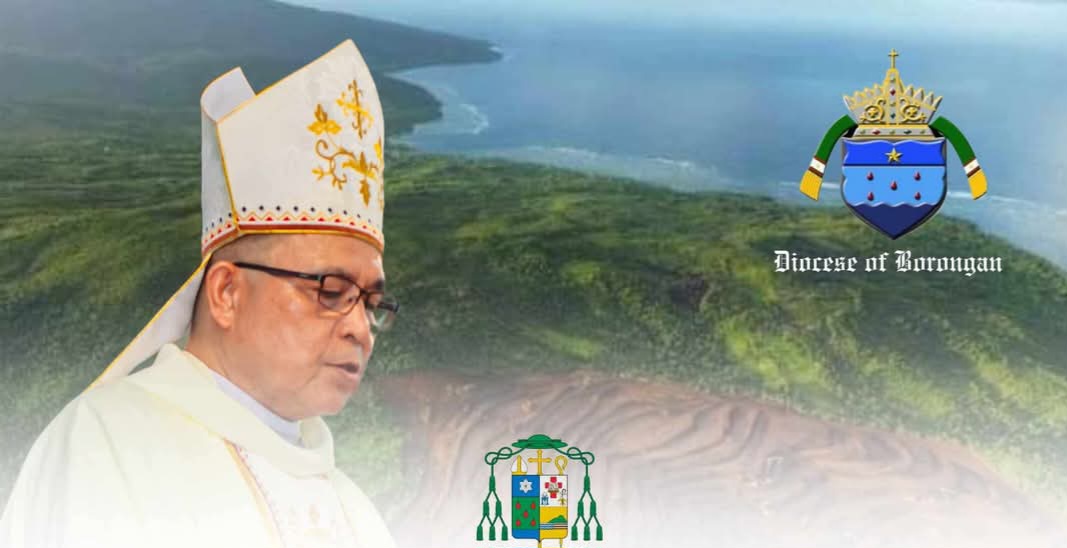
Tacloban City–Bishop Crispin Varquez of the Diocese of Borongan on Sunday (January 5) issued a pastoral letter urging the faithful to be patriotic and take an active role in the coming May 9 elections by electing candidates “who can better serve our country and protect the environment.”
The bishop’s pastoral letter for the 2025 elections, which is clearly intended as his diocese’s moral and spiritual guidance for the electorate to finally take a firm stand this time for the sake of the country and the environment by “exercising our right to vote responsibly.”
“Let us stand united in our resolve to demand accountability, integrity, and genuine leadership,” Varquez wrote, adding that “it is time to reclaim our democracy and protect our planet not only for ourselves but also for the sake of the generations to come.”
The bishop raised awareness to the public about critical national, regional, and even provincial challenges that will ultimately destroy the country unless voters finally “discern wisely and choose only (candidates) who truly embody politics as a public service.”
Varquez bluntly said: “Corruption is rampant. The hard-earned money of the people (taxes), is often lost to graft and misappropriation. Political dynasties persist; money becomes the primary means to win elections, as vote-buying is commonplace. Government aid and other forms of financial assistance … foster a culture of dependency; our poor are often prey to partisan political manipulation.”
He further said that “environmental destruction has reached alarming levels, with climate change nearly irreversible. The worsening conditions due to mining operations in Homonhon Island and Manicani Island in our Eastern Samar are a case in point.”
Citing Pope Francis recently issued reminders, Varquez said politics is service, not a business or a means to amassing wealth and power. The Pope said: 1) “the just ordering of society and of the state is a central responsibility of politics”; and the “Church cannot and must not remain on the sidelines in the fight for justice” because “it is a “constitutive dimension of preaching of the Gospel.”
Highlighting on this call for commitment for the common good, the bishop of the Borongan Diocese enumerated at least five grounds to guide Christian voters in choosing the right leaders in this year’s national midterm and local elections:
- Elect the right candidates (those who embody integrity, goodness and tested commitment to serve the common good and protect our environment);
- Reject candidates supported by mining interests (or those who advocate for mining);
- Avoid political dynasties;
- Support selfless leaders (those who are willing to sacrifice for the sake of the country and the environment); and
- Encourage productivity (those who inspire people to be productive and enterprising, on food production, economic resiliency, and ensure food and financial security for all).
Varquez concluded his pastoral letter with a prayer to Our Lady, proclaiming God as One, to “intercede for our people that they be uplifted to truer levels of justice, peace, and charity.” —-Miriam G. Desacada
Highlighting Values: It emphasizes values like justice, peace, stewardship, and solidarity, urging citizens to align actions with these principles.
Moral Compass: Provides ethical frameworks for addressing issues such as corruption, inequality, and environmental degradation.
- Raising Awareness
Public Education: Informs the faithful and the broader public about critical national and environmental challenges, including climate change, deforestation, pollution, and social inequities.
Human and Environmental Interconnection: Stresses the interconnectedness of societal well-being and environmental health. - Encouraging Action
Call to Action: Inspires individuals, communities, and institutions to take responsibility and engage in transformative action for the common good.
Advocacy for Change: Encourages advocacy for policy changes, sustainable practices, and ethical governance. - Spiritual Guidance
Faith as Motivation: Connects care for the country and the environment with faith teachings, such as the Biblical concept of stewardship and the call to love one’s neighbor.
Hope and Renewal: Offers a message of hope and renewal, urging people not to despair but to work together toward solutions. - Unity and Solidarity
Common Good: Aims to unify diverse groups under a shared commitment to the country’s welfare and environmental protection.
Building Bridges: Promotes collaboration among government, civil society, religious groups, and individuals. - Prophetic Voice
Challenging Injustice: Serves as a prophetic voice, speaking truth to power and challenging systems of oppression, exploitation, and neglect.
Advocacy for the Vulnerable: Highlights the plight of marginalized groups, including those most affected by environmental and socio-political crises.
For example, Pope Francis’s encyclical Laudato Si’ exemplifies such a pastoral call, urging global action against environmental destruction and advocating for a more just and sustainable world. Similarly, pastoral letters in the Philippines have historically addressed social issues such as human rights, governance, and ecological preservation, reflecting the Church’s commitment to the moral and spiritual well-being of the nation and the environment.